The use of Hydrogen in the Mobility sector is increasingly emerging as a key player on the road to climate neutrality by 2050. Although its versatility and efficiency make it a cross-cutting solution for all types of transport, everything points to its use in heavy transport vehicles for long distances and passenger transport, where we will finally see a major commitment from manufacturers.
The hydrogen roadmap for mobility
The Hydrogen Roadmap approved by the Ministry of Ecological Transition and the Demographic Challenge (MITECO) foresees the deployment of at least 150 buses; 5,000 light and heavy vehicles; and 2 lines of commercial trains powered by renewable hydrogen.
What kind of vehicles already run on hydrogen?
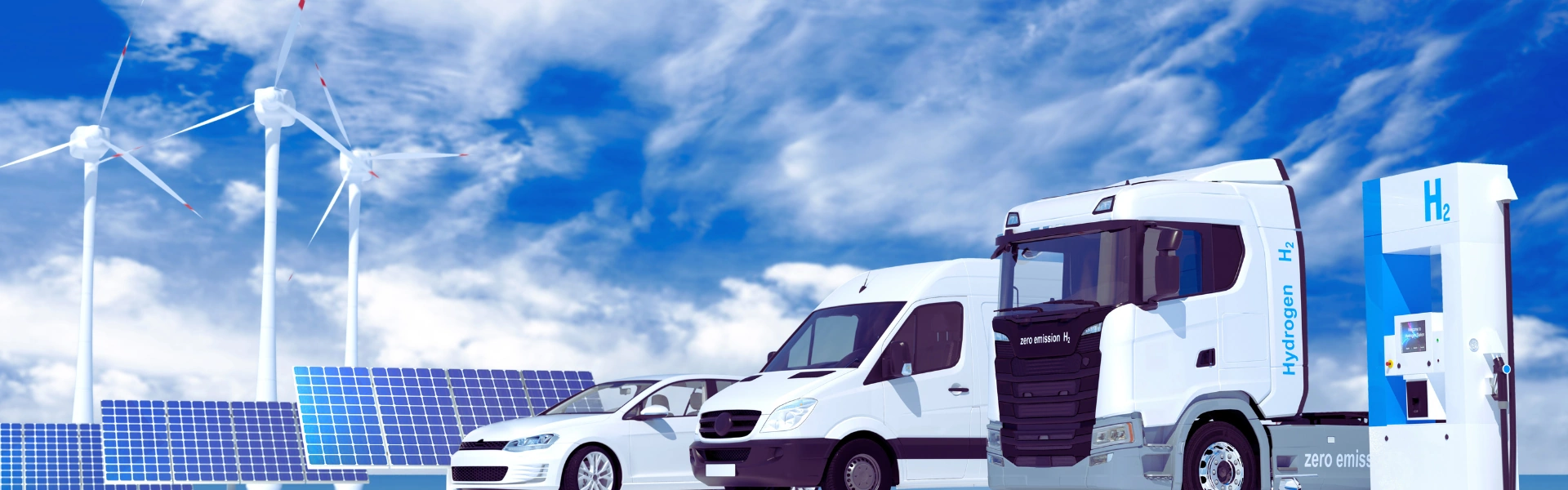
In a previous post we discussed the drawbacks of hydrogen deployment in passenger cars. However, in other transport segments, the future of hydrogen is promising. Numerous manufacturers around the world are betting on the development of vehicles powered by this energy vector in the heavy goods and passenger transport segment: trucks, buses, trains, planes and ships. The advantages are clear: longer range, lighter weight, faster refuelling and better performance in extreme conditions.
Hydrogen trucks
Manufacturers such as Hyndai, Toyota and Nikola have developed fuel cell trucks (FCEV): Hyundai XCIENT, Nikola Tre or Toyota-Kenworth T680 FCEV. In the field of hydrogen internal combustion trucks (HICEV), MAN Hydrogen Truck (prototype) and Cummins H2-ICE stand out.
Hydrogen buses
Public transport is also committed to sustainable mobility with hydrogen buses from brands such as Toyota, Solaris, Caetano Bus and Van Hool. In Spain, the commitment is firm. Cities such as Barcelona, for example, already have a fleet of 46 buses and will soon incorporate 36 more. In Madrid, 11 hydrogen buses also operate.
Hydrogen trains
The adoption of hydrogen trains is still at an early stage. In Spain, Talgo is developing the Vittal-One project, a hydrogen train designed for commuter and medium-distance services. The Hympulso project, also led by Talgo together with a consortium of several companies, is developing the first high-speed train for long distances. CAF participates in the FCH2Rail project, which has developed a bimodal train that combines catenary energy with a hybrid fuel cell and battery system. In Europe, companies such as Alstom, Siemens Mobility and Stadler are also exploring the use of hydrogen in the rail sector. Germany, for example, already has a fleet of 16 trains from the manufacturer Alstom, and has become the first country in the world to operate a fleet of hydrogen trains.
Hydrogen aircraft
In the aviation sector, companies such as Airbus and startups such as ZeroAvia are developing hydrogen aircraft prototypes, with the first commercial models expected to operate in the 2030s.